
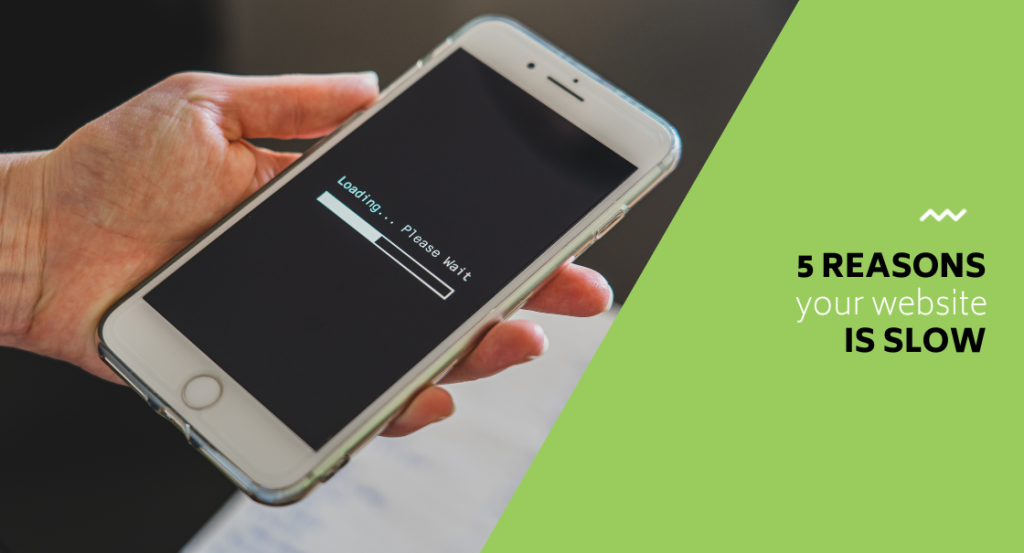
Page speed affects more aspects of your website’s performance than most business owners realize. A slow-loading site frustrates visitors, harms search engine rankings, and costs you conversions before anyone has had the chance to see your content or make a decision. At FirstPage Marketing, we factor page loading speed into everything we do, from full website builds to minor page edits, because the consequences of getting it wrong show up quickly and clearly in the data.
Why Slow Page Speed Is a Problem Worth Taking Seriously
Before getting into the causes of a slow website, it is worth understanding what is actually at stake. Slow load times are not just an inconvenience: they affect your site in several measurable ways.
Search Engine Rankings
Page speed is a documented ranking factor for Google. Search engines are focused on delivering the best possible experience to the people using them, and a slow site works directly against that. Google’s PageSpeed Insights tool gives webmasters detailed data on where their pages are slow and where improvements will have the most impact. If you have not run your site through it recently, it is a useful place to start.
User Experience and Engagement Metrics
Visitors who encounter a slow site do not wait around. They leave, and they often head back to the search results to click on a competitor. Search engines track this behaviour through engagement signals like bounce rate and time on site. A pattern of visitors arriving and immediately leaving signals that the page is not delivering a good experience, which weighs against the site in rankings over time.
Learn all about the importance of user experience.
eCommerce Revenue
For online stores, the impact of slow pages is especially direct. Every extra second a product page takes to load increases the likelihood that a customer abandons the purchase and looks elsewhere. Speed optimization for eCommerce is not optional: it has a measurable effect on revenue, and we have seen that play out with clients in this space firsthand.
Find out why conversion rate optimization is critical for eCommerce websites.
Crawl Budget
Search engine bots have a fixed crawl budget allocated to each website. When pages load slowly, bots consume more of that budget on each page and may run out before crawling the full site. The practical consequence is that new pages get indexed more slowly, and updates to existing pages take longer to appear in search results.
The 5 Most Common Reasons Your Website Is Slow
Slow sites rarely have just one problem. Several factors usually work together to drag down performance, and fixing only one of them may not produce the improvement you are expecting. Understanding the most common culprits helps you address the right things in the right order.
1. Heavy or Unoptimized Media Files
Unoptimized image files are the most frequent cause of slow page loads we encounter. Images that have not been compressed or resized for web use can be dramatically larger than necessary, requiring significant bandwidth to load. Video files, audio clips, and external embedded media all carry the same risk when they are not handled properly. Every media file on a page should be optimized before it is uploaded, and external media should be embedded only when genuinely necessary.
2. Poor Website Hosting
Not all hosting plans perform equally. Shared hosting, where server resources are divided among multiple websites, is the most common and affordable option, but it comes with limits. Sites with high traffic, online stores, or significant interactive elements can outgrow a shared plan faster than expected. Investing in a faster or dedicated server is often the most direct route to improved baseline performance. Whether your current plan is actually suited to what your site is doing is a question worth asking.
3. An Accumulation of Redirects
When a page is removed or content moves to a new URL, a redirect is typically put in place to prevent dead links. Over time, if those destination pages are also removed or moved, redirects can stack on top of each other, requiring a visitor’s browser to follow a chain before reaching live content. Auditing redirects regularly and ensuring each one points directly to a live page reduces this overhead and speeds up the experience for visitors.
4. Excessive HTTP Requests
Every element a page needs to display, including images, stylesheets, scripts, and fonts, typically requires a separate HTTP request to the server. The more requests a page generates, the longer it takes to load. Reducing the number of files a page depends on and implementing effective caching so that returning visitors do not reload everything from scratch are two of the most reliable ways to improve this.
5. Heavy or Inefficient Code
The code underlying a website can itself be a significant source of drag. Outdated code and themes loaded with features the site does not actually use both add weight without adding value. WordPress sites in particular can accumulate plugins over time, and each one adds its own overhead. When too many are running simultaneously, the cumulative effect on load time becomes real. Consolidating functionality into fewer, well-maintained plugins or replacing plugin-based features with custom code where possible makes a measurable difference.
If your site is loading more slowly than it should, the causes are almost always identifiable and fixable. Our team regularly performs page speed audits and optimization for clients across a range of platforms. Give us a call at 604-866-2230 and we can take a look at what is slowing your site down and what would make the most difference.