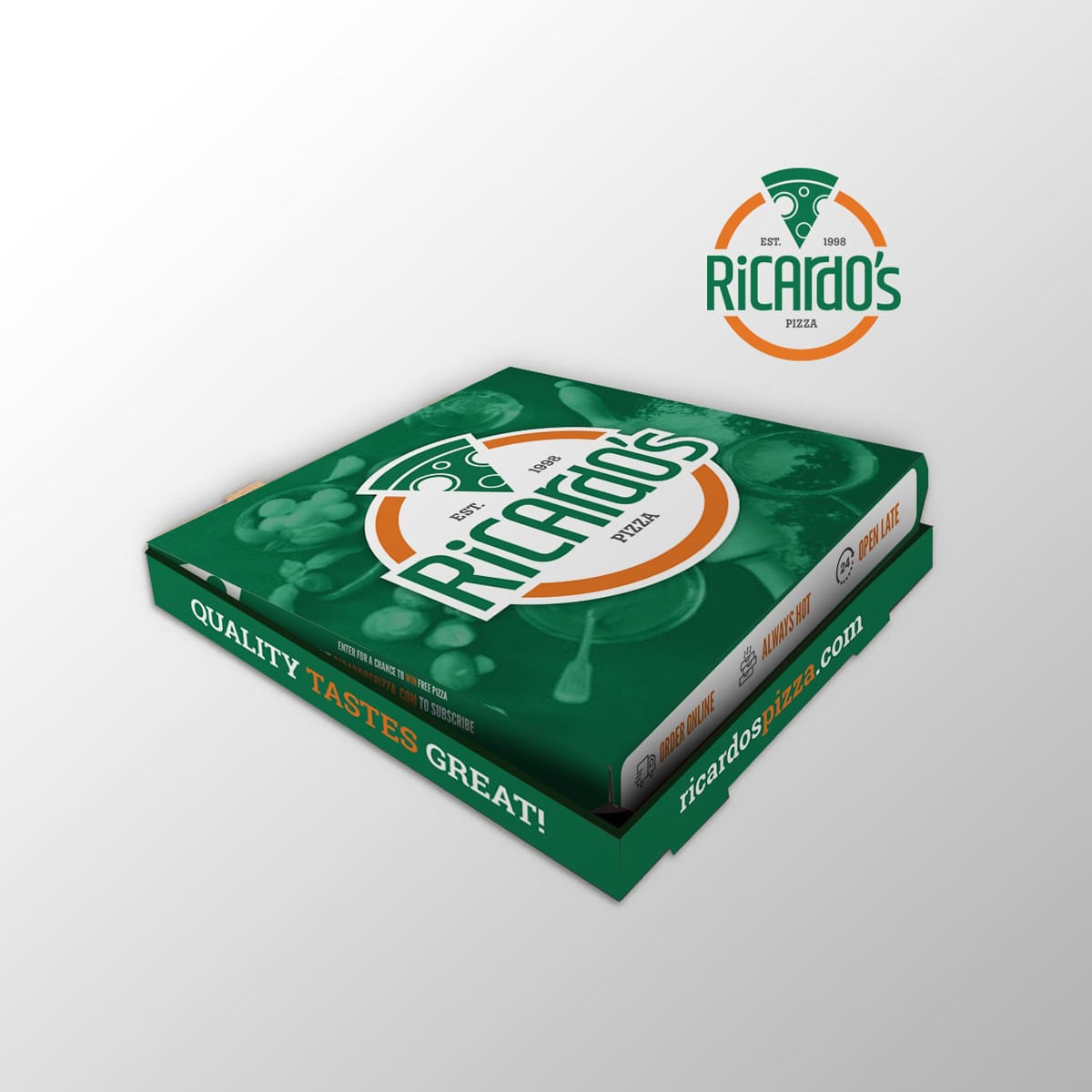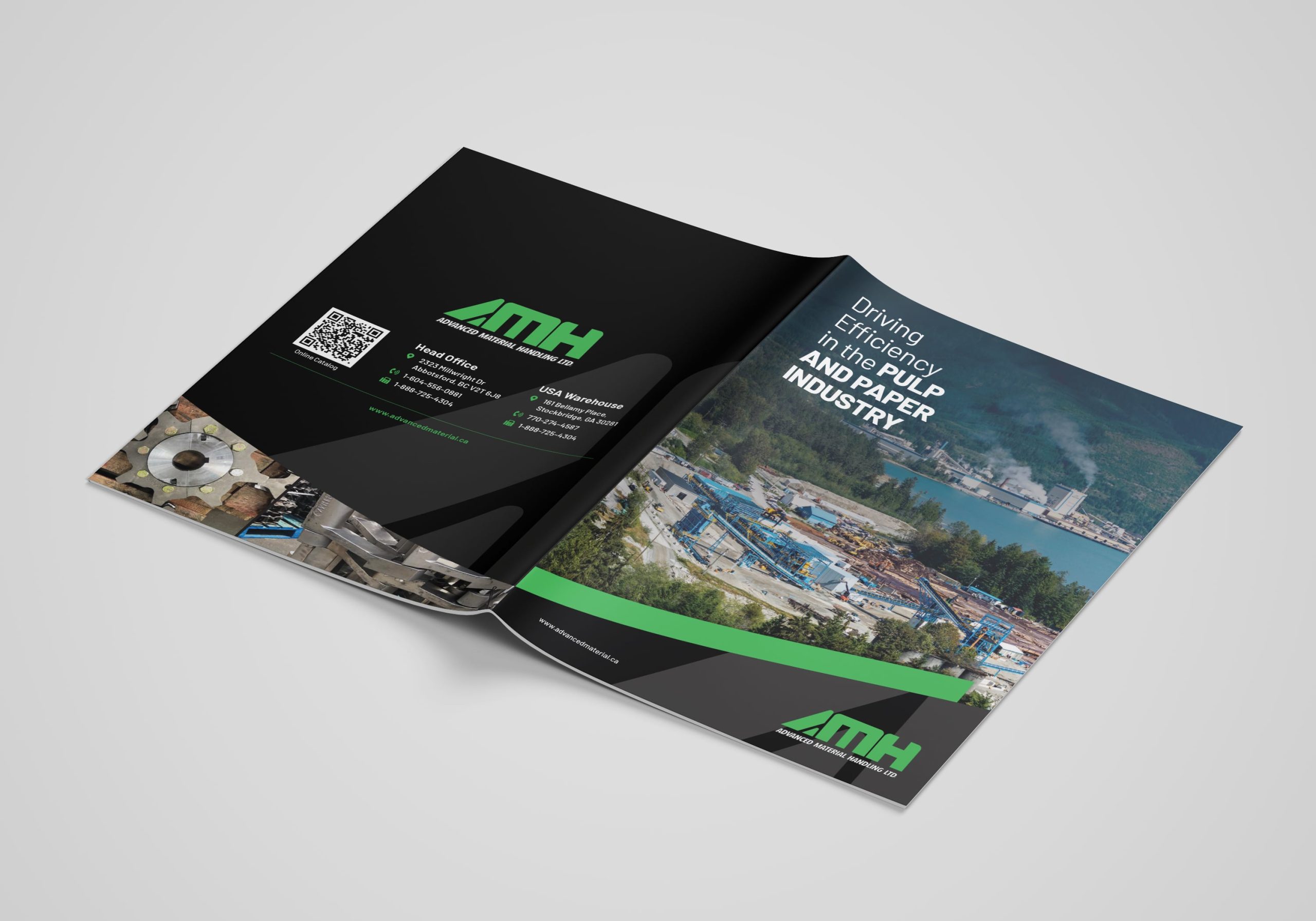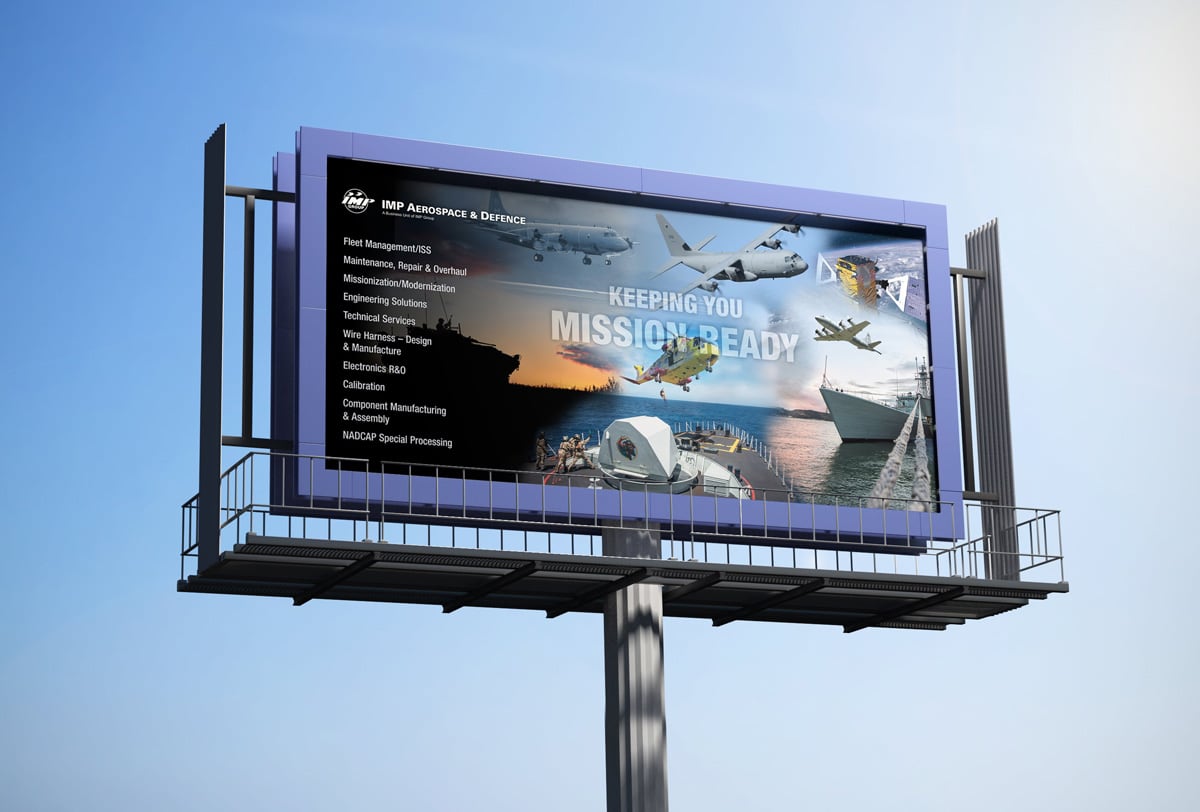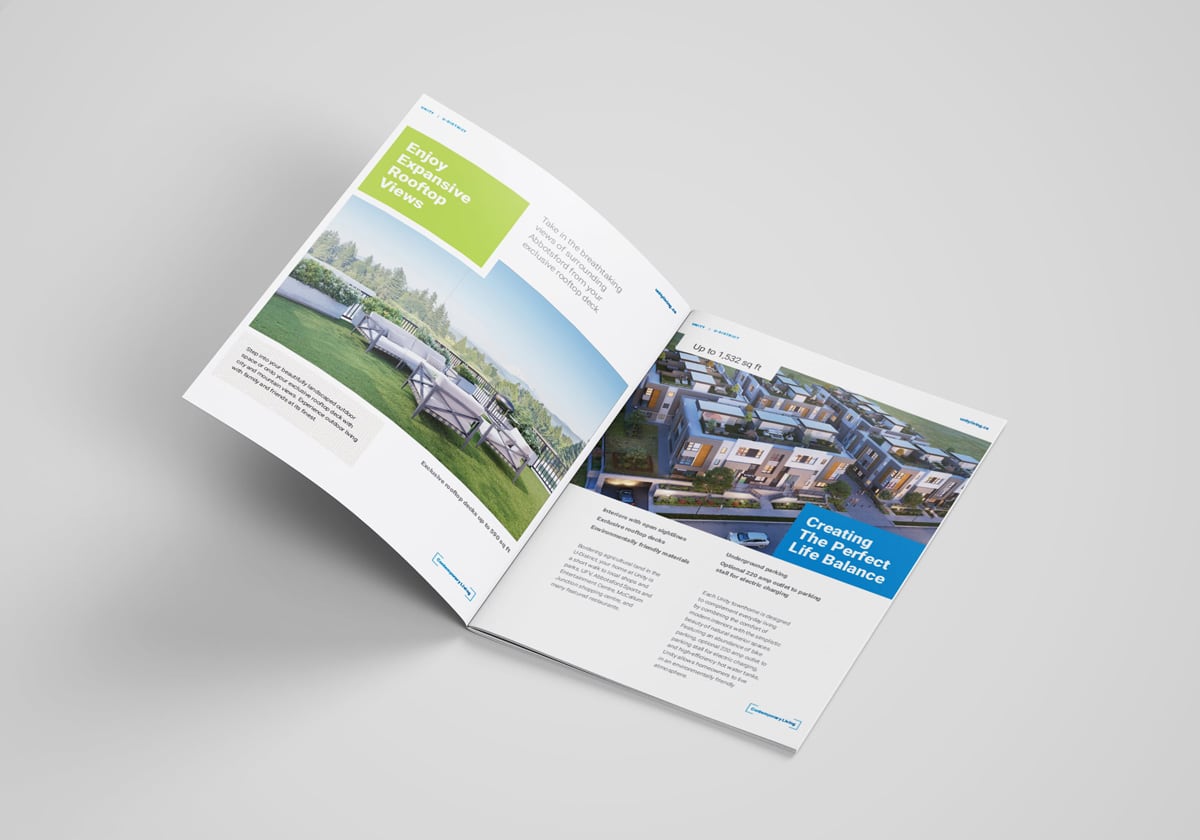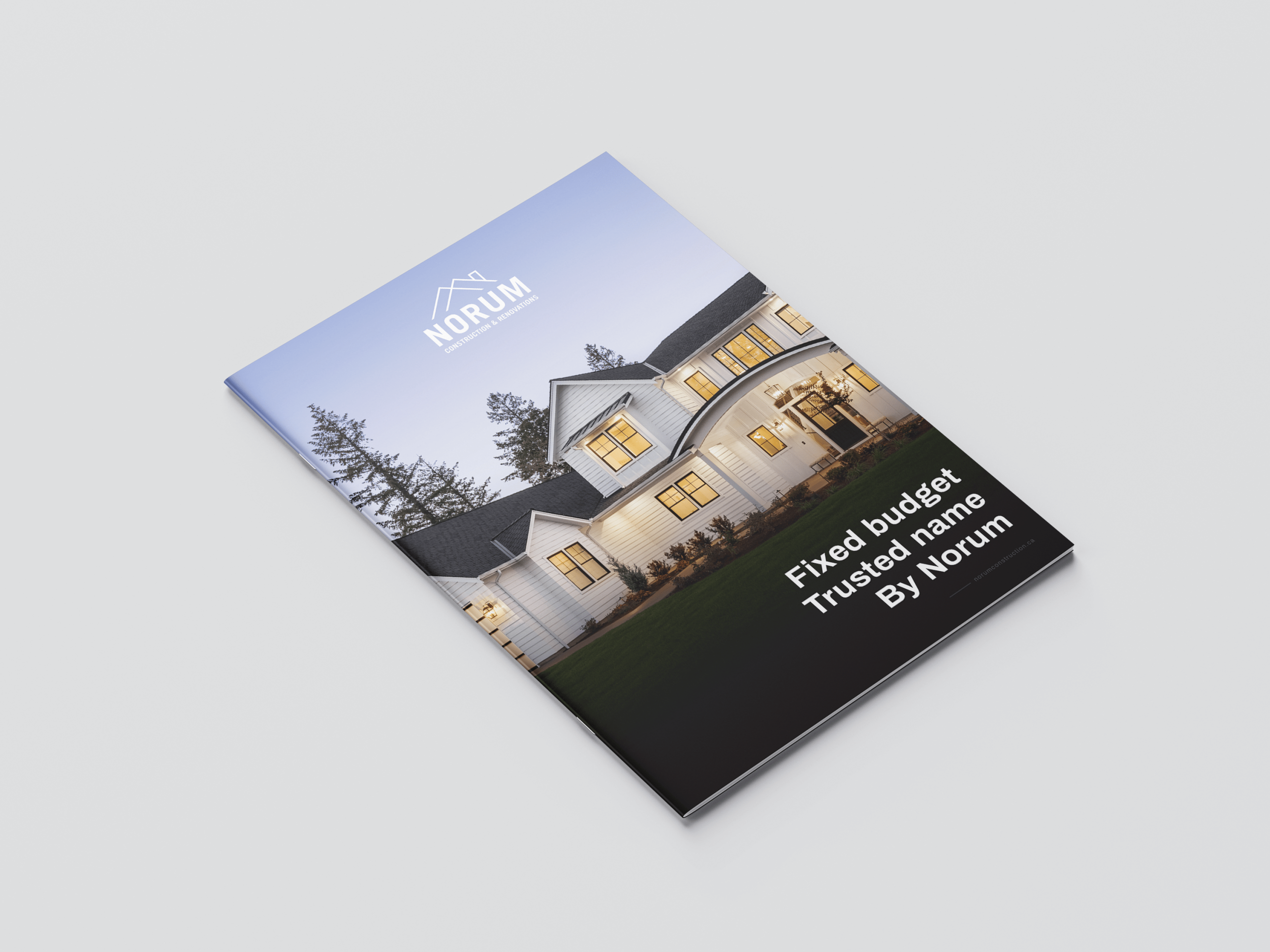
Most businesses know they need print materials. The challenge is getting them to actually look good and feel consistent with everything else your business puts out. A brochure that doesn’t quite match the website, a business card that feels off-brand, a tradeshow banner that looks like it was assembled in a hurry, stationery that doesn’t quite match anything else. These things get noticed, even when customers can’t articulate exactly why. We’ve been designing print materials for businesses across BC and Western Canada for over 25 years. We make sure the brand your customers see on paper is the same one they see everywhere else.
Despite what you might hear, print is far from dead. Research consistently shows that physical marketing materials generate higher recall than digital alone, and in industries like real estate, trades, hospitality, and professional services, a well-designed brochure or business card still does a lot of work. What matters is that the design is done right: print-ready files, correct colour profiles, proper bleed and margins, correctly specified Pantone values, and a result that actually looks the way you imagined when it comes back from the printer. We handle all of that, so you don’t have to become an expert in CMYK colour modes and DPI requirements to get something you’re proud of.
Print-ready files
delivered in the correct format for your printer
Consistent brand colours
across offset, Pantone, and large format
Design that works
across every material, from business cards to banners
Expert guidance
on format, finish, and paper stock
Liaison with print shops
so you don’t have to manage that relationship
Brand consistency
across your digital and print marketing
25+
years of print
design experience
100s
of print projects
completed
Offset
Pantone, digital,
and large format expertise
Print-ready
files, every time





Your stationery is often the first physical impression your business makes. Business cards, letterhead, envelopes, and presentation folders designed with your brand standards applied consistently tell customers that your business is professional and that it pays attention to details. We design stationery that holds up across every touchpoint, from a card left on a counter to a folder handed across a boardroom table.
Our logo and brand creation process has been refined over decades of working with businesses across nearly every industry. We don’t just hand you a logo; we help you develop a complete brand identity that can be applied consistently across every print and digital format. That means defining your colour palette in both RGB and CMYK values, establishing type standards, and creating the brand guidelines that make every future design decision easier. Whether you’re starting from scratch or updating a brand that’s grown out of date, we’ve done it before.
A well-designed brochure gives customers something to hold onto after the conversation ends. We design tri-folds, bi-folds, gatefolds, booklets, and full catalogues that present your products or services clearly and in a way that reflects your brand. We’ve produced everything from simple service brochures for trades companies to multi-page product catalogues for retailers and manufacturers. Whatever format fits your budget and your audience, we can design it.
Banners, posters, pull-up displays, tradeshow backdrops, vehicle wraps, and exterior signage all operate at a different scale from print-on-paper materials, and they require a different design approach. Resolution requirements are different, viewing distances matter, and the environment where the piece will be displayed changes what works visually. We’ve designed large format materials across all of these categories and understand what it takes to produce something that reads well at a distance and holds up under scrutiny up close.
Tradeshows are expensive, and the materials you bring need to do real work. A well-designed booth display, paired with branded handouts and materials that match your overall identity, makes a different impression than materials that feel assembled from separate sources. We design complete tradeshow packages: booth displays, pull-up banners, table covers, handout brochures, and branded giveaways. Everything is consistent with each other and with the rest of your brand.
If your business relies on outdoor advertising like billboards, transit ads, or building signage, the design standards are demanding. Copy needs to communicate in seconds. Contrast needs to work in direct sunlight and at night. Brand colours need to be specified correctly for large format production. We’ve designed outdoor advertising for businesses across BC and understand the constraints and opportunities that come with the format.
Before we open a design file, we want to understand your business and your brand. Do you have existing brand guidelines we’re working within, or are we establishing something new? What are the mandatory brand elements, and where is there room for creative decisions? Who is the audience for this piece, and what do you want them to do after they see it? Those answers shape every design decision that follows.
We look at the format requirements for the project, the print method being used, and any technical constraints the printer has specified. Offset, digital, and large format print methods all have different file requirements, colour profiles, and finishing options. Understanding those before we start designing means we don’t have to go back and rebuild files later. We’ll also look at what’s working in your industry and what your competitors are doing, so the design is informed by more than just aesthetic preference.
We present initial concepts for your review. You see the direction before we invest in execution, and we welcome your input at this stage. Revisions happen here, not after you’ve approved a final file. We’d rather spend extra time getting the concept right than deliver a finished product that needs to be rebuilt.
Once the concept is approved, we refine the design to a finished state and present it for your sign-off. At this stage we’re checking every detail: typography, spacing, colour consistency, and accuracy of any content that was provided. Nothing goes to print prep until you’ve approved the final design.
This is where we convert the approved design into a file the printer can actually use. That means setting up correct bleeds and margins, embedding or outlining all fonts, converting colours to the appropriate profile for the print method, and checking resolution on every image. We deliver files in the format your printer requires, typically print-ready PDFs, and we can liaise directly with the print shop if any technical questions come up during production.

A lot of designers can make something look good on screen. Fewer understand the technical requirements that make print work: correct CMYK colour profiles, minimum resolution requirements, proper bleed setup, and the differences between offset, digital, and large format production. We’ve been preparing print-ready files for over 25 years and have a thorough understanding of what printers need to deliver a result that matches what was designed. That gap between a design that looks good on screen and a print job that looks the way it should is where a lot of projects go wrong.
The biggest challenge in print design is maintaining brand consistency when the same identity needs to work on business cards, brochures, pull-up banners, and billboards. Colour that looks right on a business card can look different on a banner produced with a different ink system. We manage those variables, specifying Pantone colours where consistency is critical and adjusting colour profiles appropriately for each print method. What you see is what you get, regardless of the format.
Because we also design websites and manage digital marketing, we can make sure your print materials and your online presence are genuinely aligned: not just similar in colour, but consistent in voice, layout logic, and brand expression. A customer who receives your brochure and then visits your website should feel like they’re dealing with the same business. That kind of cohesion doesn’t happen by accident, and it’s easier to achieve when the same team is working on both.
Dealing with commercial printers requires a different vocabulary and a different set of expectations than most clients are used to. File specifications, turnaround times, proof approval, and finishing options all require careful navigation, and misunderstandings can be expensive. We manage that relationship on your behalf. We know what to ask for, how to read a proof, and how to catch problems before they become print runs you have to discard. You focus on your business; we handle the production side.
With this being the first site I had to make they were great with walking me through the steps of what was needed. Marie was awesome to deal with and her team did a great job on our website. We also had a logo re-brand with them and they knocked it out of the park.
~ Jason Finch
Legacy Fire & Safety Inc.
At First Page Marketing! Our experience was fantastic - with their exceptional customer service, to the careful design that went into details and attention they paid to our feedback as they ensured our ideas were translated into concepts and final products we were happy with. We felt supported from the very beginning, through the entire process, until the end.
~ Renae Regehr
Care for Women
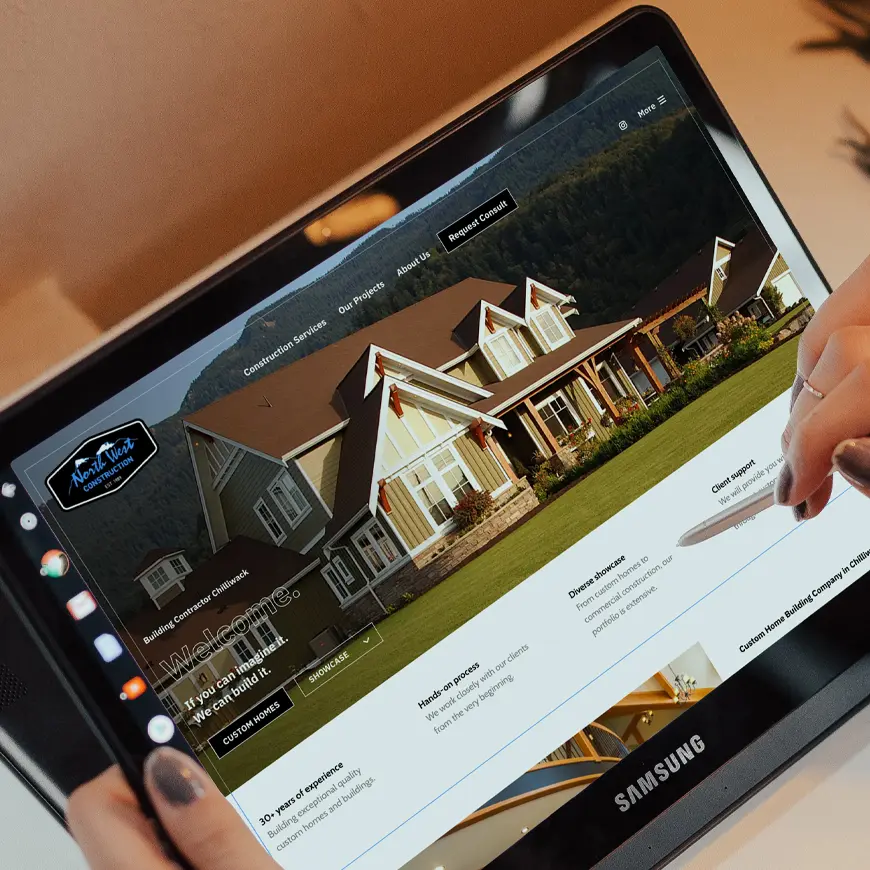
in online contacts and completions
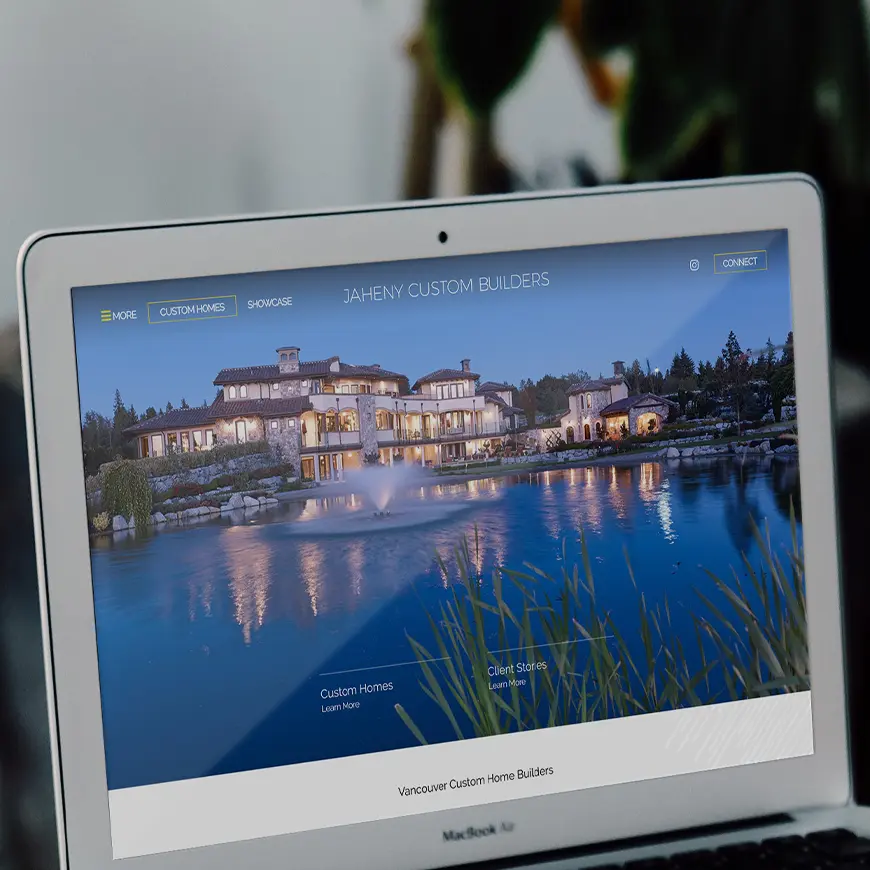
in traffic sessions from Vancouver
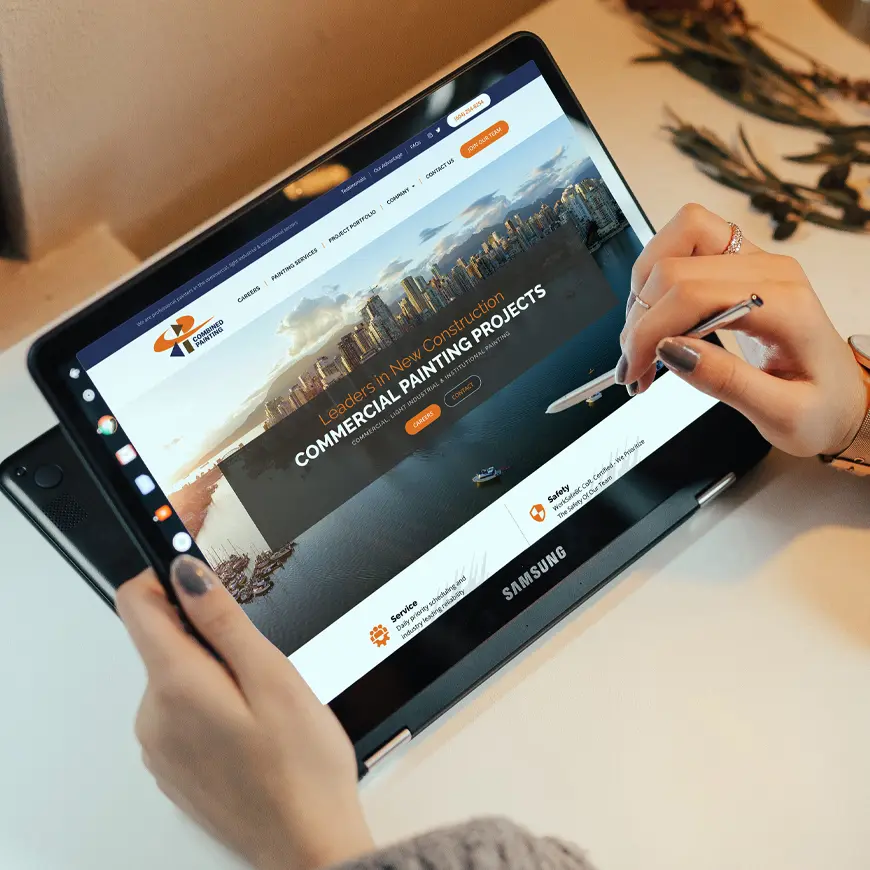
for Vancouver, Calgary and Winnipeg

increase in traffic from Vancouver

increase in traffic
We deliver print-ready PDFs as the standard output for most print projects. These are set up with the correct bleeds, embedded fonts, and colour profiles for the specific print method being used. If your printer requires a different format (such as native InDesign or Illustrator files), we can discuss that as part of the project scope. We’ll always confirm the printer’s specifications before we finalize files.
CMYK (Cyan, Magenta, Yellow, Black) is the four-colour process used in most commercial printing. It can reproduce a wide range of colours, but the output can vary slightly between print runs and print methods. Pantone (PMS) colours are standardized inks mixed to a specific formula, which means you get exactly the same colour every time, regardless of where or how something is printed. For businesses where brand colour consistency is critical (across business cards, signage, vehicle wraps, and promotional materials), specifying Pantone colours is worth the added cost. We help you decide which approach makes sense for your project and your budget.
Both. If you have existing brand guidelines, we work within them. We’ll review your standards document, confirm colour values, typefaces, and logo usage rules, and apply them correctly to the new materials. If your brand guidelines are incomplete, outdated, or non-existent, we can develop them as part of the project. Having documented brand standards makes every future design project faster and more consistent, so it’s worth the investment if you don’t already have them.
Yes, and we think this part of the process is worth taking seriously. The paper weight, texture, and finish you choose affect how a piece feels in someone’s hands, which shapes how they perceive your brand. A soft-touch matte laminate on a premium brochure communicates something different from an uncoated stock. Spot UV on a business card gets remembered. We’ll walk you through the options that fit your project and your budget and give you an honest recommendation.
Yes. Large format design has different technical requirements than standard print: higher resolution specs for the substrate, different colour profiles for wide-format inkjet printing, a different layout approach given viewing distance, and file sizes that most standard design workflows aren’t set up to handle. We’ve designed pull-up banners, tradeshow displays, outdoor signage, and vehicle wraps, and we understand what it takes to produce something that works at scale.
We can do either, depending on your preference. If you have an existing relationship with a printer and want to manage that yourself, we’ll deliver the files in whatever format they require and answer any technical questions they have. If you’d prefer us to manage the print shop relationship directly, we can handle that too. We’re comfortable working with commercial printers and understand their language, which tends to prevent misunderstandings that can lead to expensive reprints.
Timeline depends on the scope of the project. A single-piece design like a business card or a simple flyer can typically be turned around in one to two weeks. A more complex project like a multi-page booklet, a complete stationery suite, or a full tradeshow package usually takes three to five weeks, depending on how quickly feedback and approvals move on your end. We’ll give you a realistic timeline estimate before the project starts.
Yes. If you have an existing logo and brand identity you’re happy with, we can design new materials that work within those standards. We’ll need your logo files in a vector format (typically an .ai, .eps, or .svg file) so we can scale it correctly for different applications. If you only have a low-resolution version, we may need to redraw it before it can be used in print-ready files.



We’re here to listen to you. Tell us what you need or where you want to go. We’ll help you find the best solution.